
Agents & Agency
Special Edition LP Discussion
Special Edition LP Discussion

How AI is reshaping our portfolio, our platform, and our thesis — and what it means for the companies compounding fastest.
40 min presentation · 20 min Q&A
"If you're not losing sleep, you haven't understood what's happening"
Steve Blank
Serial entrepreneur, Stanford professor & father of the Lean Startup movement
Why we have a useful perspective
Three curves rewriting the math
Rebuilt operations & portfolio support
AI across fund vintages
The thesis, now fully unlocked
What's actually changed in how we invest
Open discussion
Why we have a useful perspective on what's happening.
"You should sell this to other funds"
That's something we've heard about our platform. 18 months ago we started pushing on AI use cases — for both work and fun — to give us perspective on software (Sync, Robots@, creditdb.ai) but also hardware (outruncarbon.com).
Our portfolio is mostly not pure software. "AI is eating software" is what a lot of people see — but we see what it means beyond software. Real deployments across every fund vintage, in hardware-heavy companies solving physical-world problems. That's a perspective most AI-focused investors don't have.
2024
High effort · Low automation
Manual scheduling, personal intros. Deep expertise, but slow to scale.
2024
The original drivers
2026
The new superpower
1,000×
cost decline in 3 years — faster than PC compute or dotcom bandwidth.
Portfolio: Robot.com, Cove
TS Platform: Deal Evaluation, Investor Intros
3 → 10
A 3-person team in 2026 ships what required 8-10 engineers in 2023.
Portfolio: Nevoya, Cove, [Stealth]
TS Platform: creditdb.ai, Stonly rebuilding infra, Shaun's EV project
Production
From impressive demos to non-technical teams running real automations.
Portfolio: Nevoya, [Stealth]
TS Platform: Portfolio Ranking, Lunch & Learns
| Feb 2025 (12 months ago) | Feb 2026 (today) | Feb 2027–28 (forward) | |
|---|---|---|---|
| GPT-4-equivalent cost | ~$4–6 / M tokens | ~$0.40 / M tokens | Likely $0.04–0.10 / M tokens |
| Price decline rate | ~10×/year | Accelerating to 50–200×/year | Continuing; frontier remains premium |
| Impact on a 3-person startup | AI was a significant line item; selective use | AI costs are rounding error; use it for everything | Essentially free for non-frontier tasks; bottleneck is human judgment |
Source: a16z "LLMflation", Epoch AI
"Most of Claude Code is written by Claude Code"
Boris Cherny
Creator & Head of Claude Code, Anthropic
Not just cheaper or better, but also faster. Automation can run independently for longer.
| Feb 2025 | Feb 2026 | Feb 2027–28 | |
|---|---|---|---|
| Context windows | 128K–200K tokens | 200K–1M+ tokens | Multi-million; persistent memory |
| Agent reliability | Demos impressive; production spotty | Production-ready for defined domains | End-to-end workflows; exception-based oversight |
| Multimodal | Text + image emerging | Vision, audio, documents standard | Full reasoning across all modalities |
Since we decided to allocate time to experimenting with AI nearly 2 years ago, we've rebuilt most of our stack and added a bunch of new capabilities.

| 2025 | 2026 | |
|---|---|---|
| Stonly | Patching existing code | Agents as part of the stack from day one |
| Shaun | Major failures on engineering questions | Core design partner on the EV Lemons car — outruncarbon.com |
| Yana | Mostly unhelpful | Massive manual audit reduction |
| Miela | A database | A real service — creditdb.ai |
Regular sessions designed to reset expectations of what's possible. Founders leave inspired to try things they hadn't considered — because seeing a real example makes it feel achievable, not theoretical.
We're not just investors who believe in AI — we've rebuilt our own operations on it. That's why we can evaluate founders doing the same thing.

AI across fund vintages — the teams compounding fastest were building this way before it was obvious.
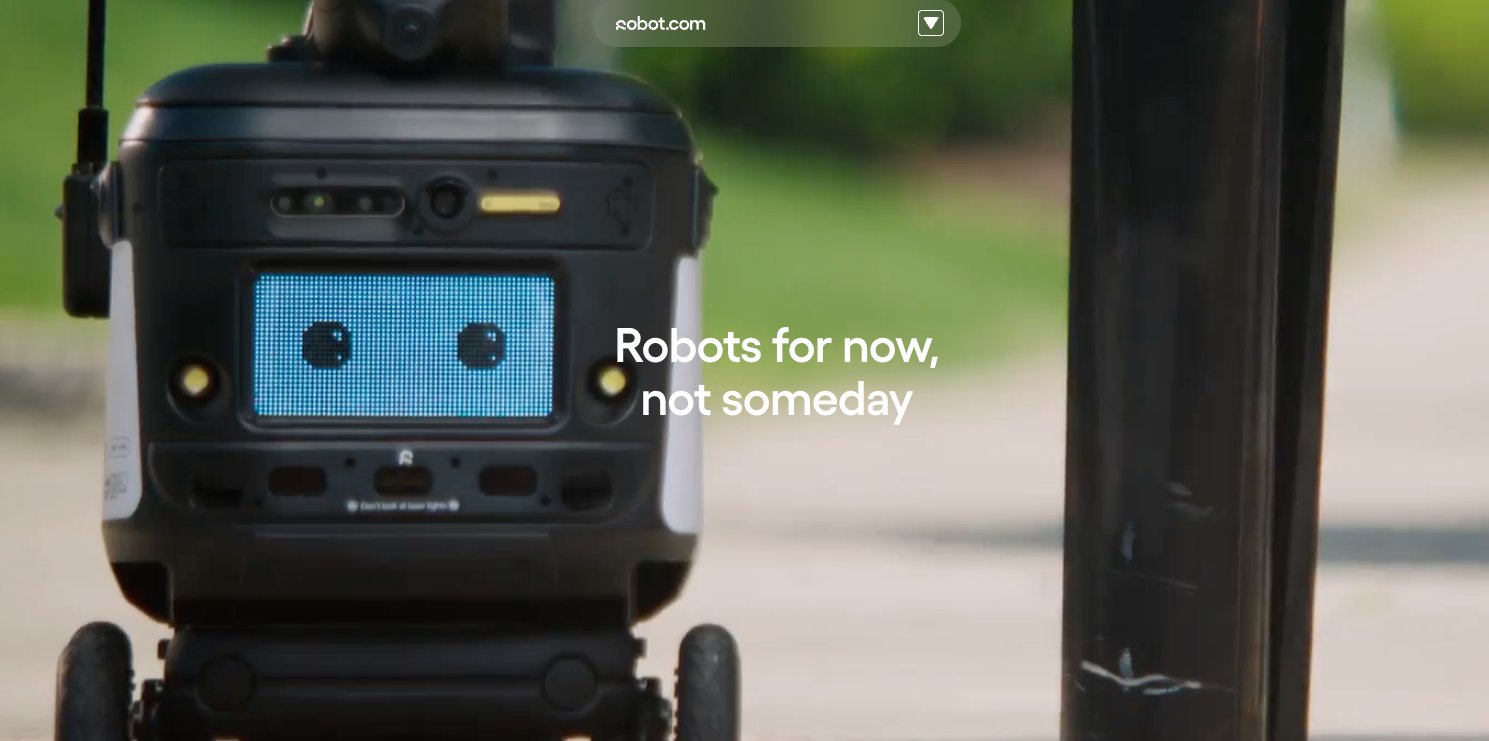
AI embedded across the entire stack from early on. Longest arc, most compounded. Now positioned for IPO — the clearest example of what happens when AI orientation is structural from the start.
This isn't a 2024–2025 AI story. They were building this way in 2016.
Third Sphere Key Learning
Bet on multiple cost curves simultaneously — electric drivetrains, edge compute, machine vision. As robot delivery passes human delivery on performance, growth is ramping fast. Patience across compounding curves.
IPO
Trajectory
400%
Task growth in 7 months
1.7M+ tasks · 500+ robots deployed
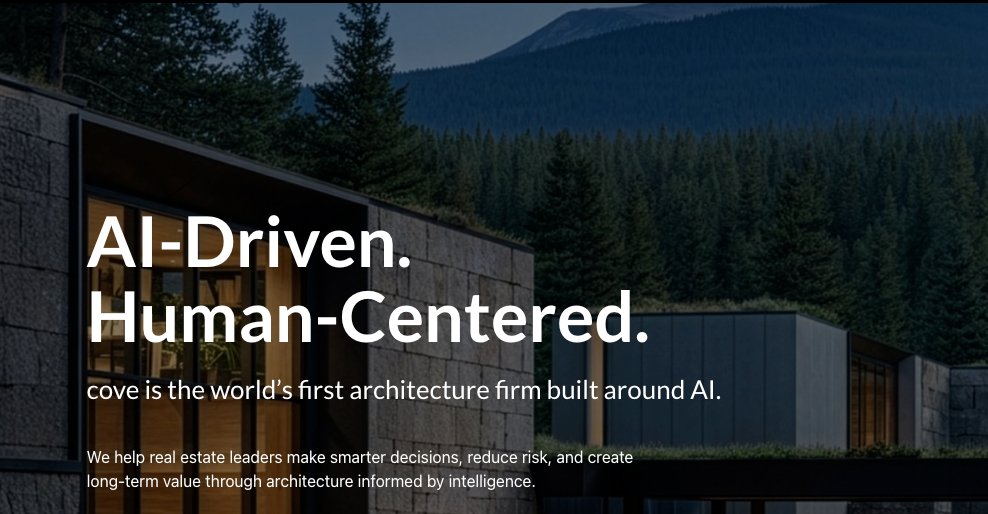
Used AI to move from SaaS tool to full-service offering in architecture, engineering, and construction. Core architecture workflows that took days now run in minutes — not just an efficiency gain, but a strategic repositioning made possible by AI capability.
The product they sell today couldn't exist without AI. The market they're in is different because of it.
Third Sphere Key Learning
Saw confusion and resistance to tool adoption in Architecture. Pivoted from "here's software" to "we'll do it for you." AI made the full-service model economically viable.
Days → Minutes
Core architecture workflows
SaaS → Full Service
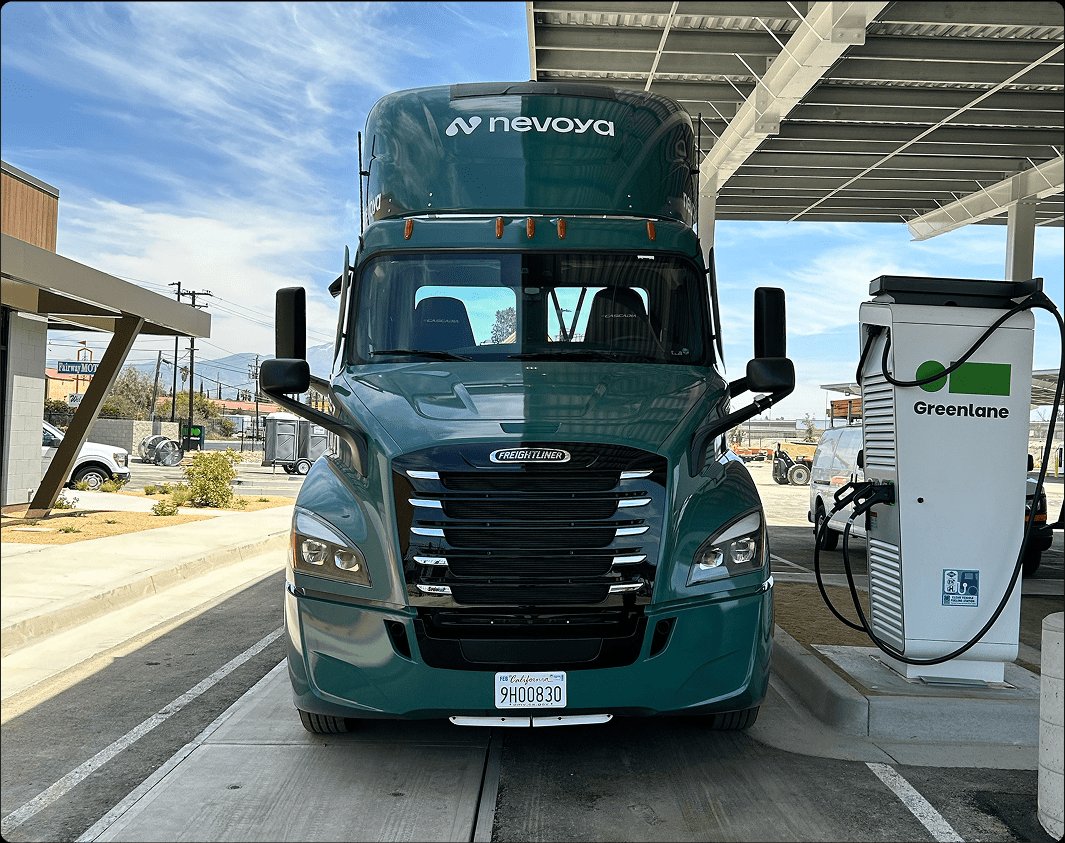
As the fleet scaled, monitoring every driver in real time became impossible. Delays and no-shows weren't caught until it was too late to act. Their fix: a Mac mini, an open-source LLM, and a handful of MCP servers.
🚛 The AI Dispatcher
Connected Samsara (GPS/telematics), Apollo (driver records), and RingCentral + SMS into a single agent workflow. The dispatcher now flags late drivers automatically — and already has full context: prior calls, texts, and GPS status, before anyone picks up a phone.
"By the time we used to find out, it was already too late." — Not anymore.
Third Sphere Key Learning
The buy vs. build question is going away — in favor of build. Nevoya built their entire software stack from scratch: charging logistics, real-time energy pricing, and now AI operations. The payoff compounds with every layer added.
0 → Leader
EV fleet carrier in 18 months
Customers include
+ other Fortune 500 shippers & leading 3PLs
Mac mini + open-source LLM
Full AI dispatcher stack — built in-house, not bought
Climate models were built to understand climate risk. It seems fitting that one of our earliest investments in this area is now poised to be part of the next era of AI architectures.
Working on large, complex problems isn't always about the first product. Often it's a few iterations in where the real value expands — and that's exactly what happened here.
We went so deep on a climate problem that the team came back with something architecturally new. Watch this space.
Third Sphere Key Learning
Happy accidents. The next generation of AI needs high-fidelity models of the real world to train on. Two of our investments — one of our oldest, one of our newest — are ideally positioned for exactly this. We can adjust the learning: patience across compounding curves pays off.
Portfolio Impact
On valuation, now the most valuable company in the portfolio — driven entirely by the shift from domain tool to foundational AI architecture.
The thesis, now fully unlocked.
Most of what they hire for — ops, analytics, support, research, content, data entry, reporting — is work AI agents can now do meaningfully.
Therefore the capital required to reach key milestones has fundamentally dropped.
All doing it — across every fund vintage.
creditdb.ai, government programs, incentives — reduces dependence on equity raises in the first place.
Across all business functions — compresses the time to revenue and lowers the cost to get there.
Written and produced with AI agents — research, drafting, editing, production. A book that would have required months of traditional publishing effort, done faster and leaner using the exact approach it describes.
Standardized complex
semiconductor mfg equipment
Platform-based complex
modular nuclear
Complex product systems
traditional nuclear
here be 🐉
Mass produced, complex
Gradient self-installed heat pump
Platform-based systems
Furno modular cement kiln
Complex-custom
geothermal
Simple, Mass Produced
Onewheel personal EV
Simple, Mass-customized
Kelvin hybrid heating retrofits
Small-batch
building envelope retrofits
R&D meant physical prototypes, expensive test cycles, specialized labs. Hardware iteration was slow and capital-intensive — the biggest cost center and risk driver for climate tech startups.
Simulation, generative design, and AI-driven testing collapse the R&D cycle. More exploration happens in software before anything is built. The risk shifts from "can we build it" to "what should we build" — and software answers that much faster.
This is why complexity and customization — the two hardest axes in hardware — are suddenly more accessible.
What's actually changed in how we invest.
Is AI doing meaningful, multi-step work in the product or operations? Not a demo, not a feature — real deployment that affects outcomes.
Does the founding team have the orientation to keep compounding on it? Are they building like this by default — not because it's trending, but because it's how they think?
If AI capability is commoditizing, pure software moats erode fast. We look for points of friction or finite elements that AI can't dissolve:
The stealth company's simulation approach is a good example — the moat is the fidelity of the real-world model, not the AI sitting on top of it.
The technology is available to everyone. The difference is who acts on it.
Open discussion. Portfolio questions. AI in your own organizations.
April 2026